
Written by Max Robertson
Let’s start by throwing a mouse, a dog, and an elephant from a skyscraper onto something soft.

Let’s say, a stack of mattresses.

The mouse lands and is stunned for a moment, before it shakes itself off, and walks away pretty annoyed, because that’s a very rude thing to do. The dog breaks all of its bones and dies in an unspectacular way, and the elephant explodes into a red puddle of bones and insides and has no chance to be annoyed.

Why does the mouse survive, but the elephant and dog don’t?
Now some of you may recognise this from a Kurzgesagt video which is true. All credits go to the Kurzgesagt team and the video this comes from will be linked at the end of this article.
“Size changes everything”. Quite an abstract phrase however it is true.
There are fundamental driving forces in nature that drive our very existence. The ones we will be looking at today are heat transfer. Turns out size plays an important role in this phenomenon.
What is heat transfer? It is the rate at which heat is transferred where heat is the measure of the thermal energy an object has. Something at 100 degrees has more thermal energy than the same object at 20 degrees. Here is a video from the YouTube channel Veritasium. Thank you Veritasium.
When cave man first created fire,

the manipulation of heat was born. We began to use it to cook as any respectable cave person would. Fast forward more than 120,000 years and we have me.
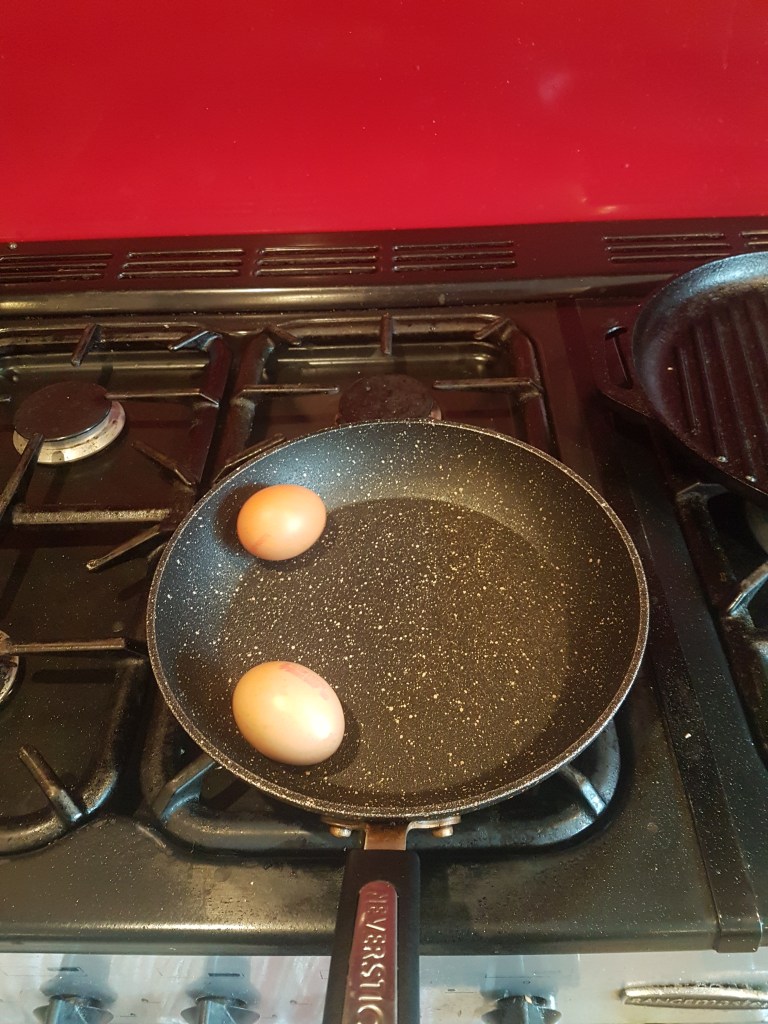
I am trying to fry some eggs.
Oh, but what is this?
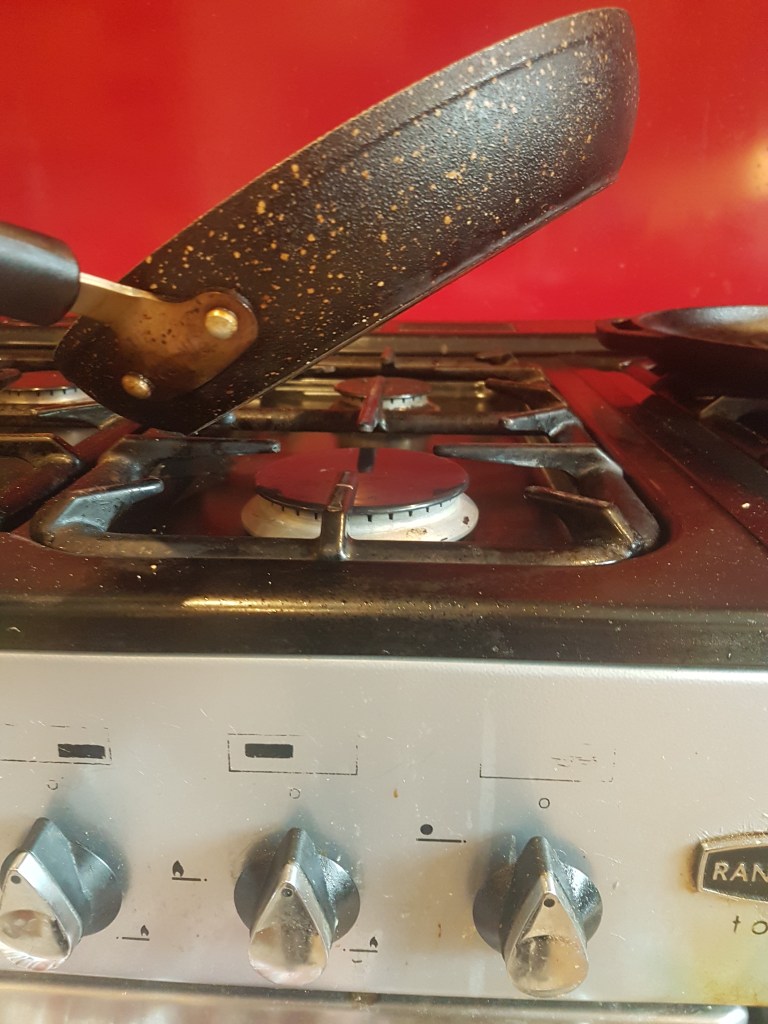
My eggs aren’t frying.
Well firstly you need to crack the eggs however I don’t think that is the main problem here. Let’s try place the pan down flat.
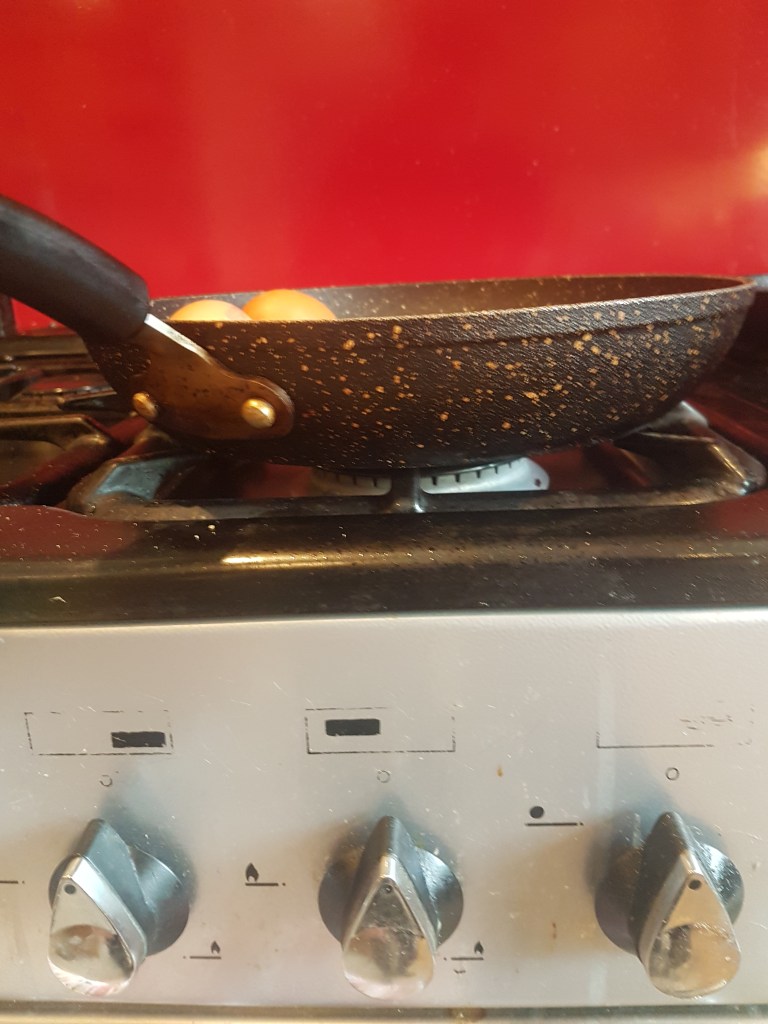
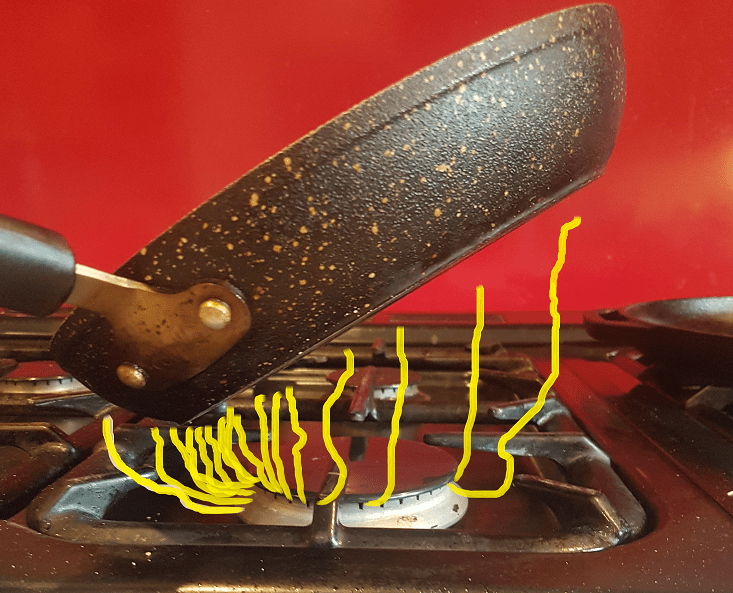
Ahhh much better. But why? Put on your heat vision goggles and I’ll show you.
The heat source on a gas stove is here.
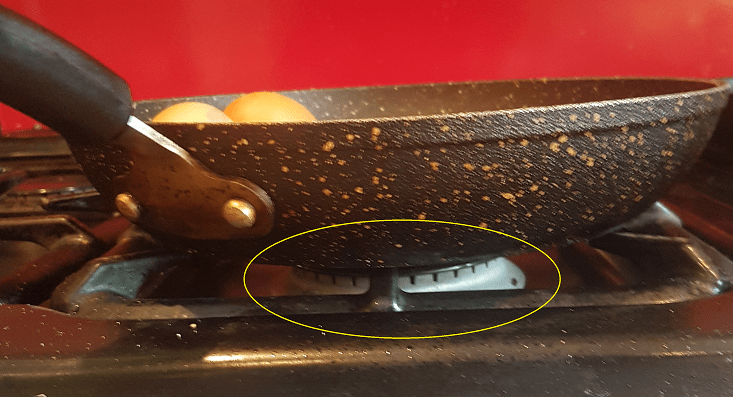
The gas burns to produce heat.
This heat is transfered to the air directly next to the source.
When the pan is on its side, most of the heat is transferred off into empty space. This is wasted heat! There is also uneven heating which is bad for my eggs.
When the pan is flat, the heat gets transferred more efficiently.
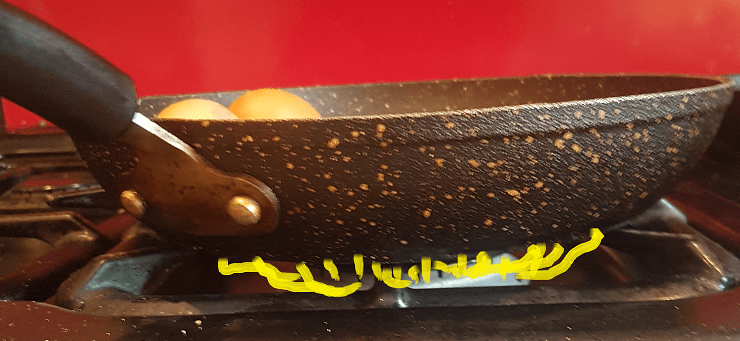
The volume is the same however the distance of the surface area from the heat source has changed. So to maximise heat transfer we need to maximise the surface area for a given volume while keeping it as close to the source as possible.
Mathematically, this is given by the equation:
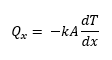
Qx = Heat transfer
k = Conduction coefficient
A = Area
dT/dx = Temperature gradient
Why is this so important?
Well let’s say hypothetically you are a large oil company refining 1.4 million barrels a day. And you made a profit of 39.9 billion US dollars during an energy crisis. To refine so much oil requires a lot of energy. For simplicity we will focus on a fractional distillation column.
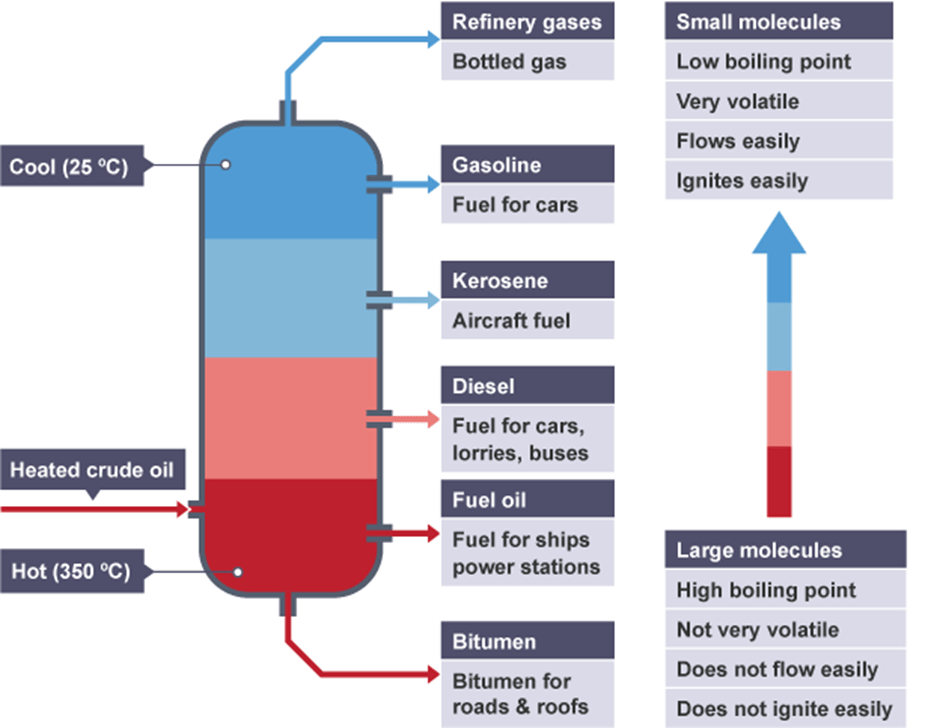
Here we are, a fractional distillation column. As we can see, the crude oil comes in preheated. The hot, thicker, and less volatile (requiring higher temperatures to achieve a gaseous state) oil is at the bottom of the column while the cooler, thinner, and more volatile oil is at the top of the column.
How big do you think this is 3 metres? 5 metres? 15 metres? Well, it does depend on how big the facility is and what type of column is being used, and the purity of products but it could be 40 metres tall! That is massive! Something so large has a very low volume to surface area ratio, like the elephant.
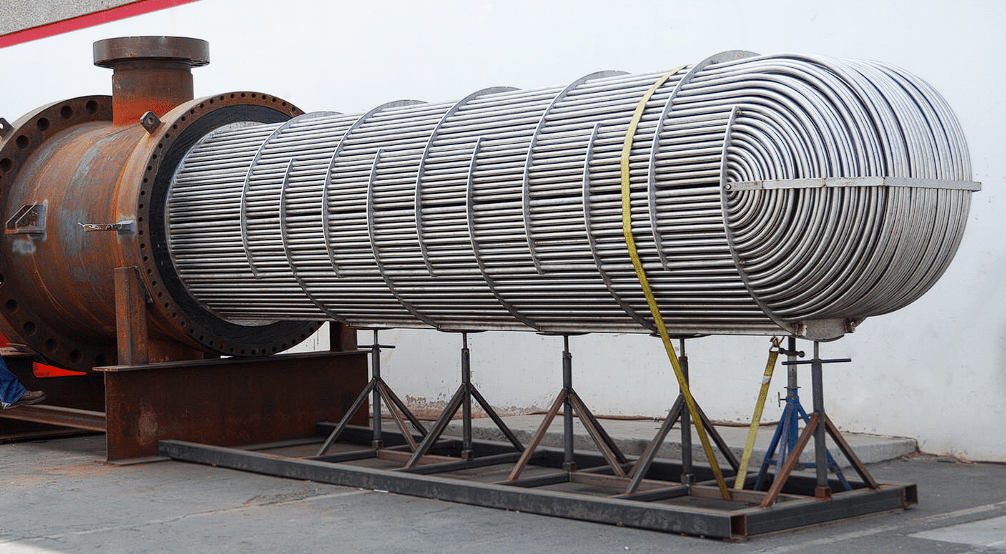
To heat this volume of oil, we need to maximise the surface area. Think of a radiator. Hot water flows through metal to heat a room. They have a huge surface area compared to the volume of the water inside them!
Now imagine your room is full of oil. Do not tell America about this. Instead of having one radiator, you have 50 stacked side by side. This is one of the ways to heat up the crude oil. Here is a picture.
Why is it good?
Because it maximises the surface area of the heat source (a hot fluid in the case of the heat exchanger) coming into contact with the oil, it heats the oil evenly, and the heat has the shortest distance to travel.
Comparing these two examples, we can clearly see how size complicates things and why it’s crucial to optimize surface area for efficient heat transfer. This is only one way to deal with heat transfer on a large scale. There are many different methods and variations of heat exchange and heat exchangers.
Now what does all this have to do with a mouse, a dog, and an elephant? Well, it was the inspiration for this article. I highly recommend checking out the 3 part videos on the Kurzgesagt YouTube channel as they look at these physical driving forces from a biological perspective and they have a much higher budget than this article!
Thank you for reading this article please check out more of these on ENGbam!
References
For photos used
 EngBAM